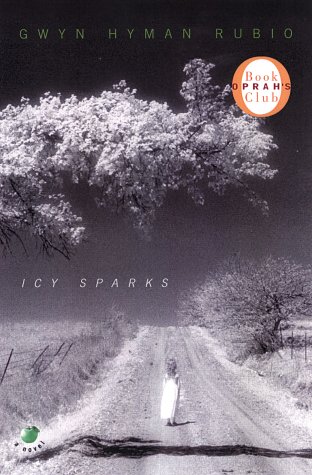
family book club: icy sparks

icy sparks

Normally I’m begging for authors not to explicitly spell things out for their readers. We’re smart, and we can tell who is sad without having to read “John is sad.”

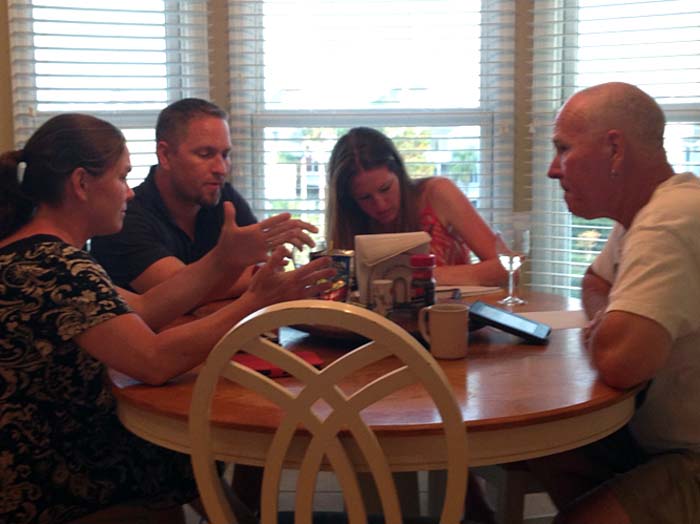
But in Icy Sparks by Gwyn Hyman Rubio (Kindle version here), I needed some things to be spelled out. It was an easy read, but one that left us with more questions than satisfactory answers when we held our quarterly book club meeting. (This time, we did it in person while we were all on vacation. Photo from my mom.)

family book club meeting

Icy Sparks is about a young girl in the South during the 50s who deals with tics and urges she can’t explain or control. She becomes an outcast and spends some time at a mental institution for observation. It’s a coming of age novel (kind of like Middlesex), and Icy goes through a lot without fully understanding why.

Continue reading “family book club: icy sparks”

past favorites: nero wolfe

So you’ve got your sunscreen on, your piña colada is cold, and you’re sitting by the pool. Now what?

This article I saw in the New York Times about different authors’ best summer reading experiences got me thinking of my own. Picking a beach read is an art, and one I’ll gladly devote time researching. Right now I’m reading Joyland by Stephen King–it’s good so far.

I like mysteries, and scary stories, and a good series. My favorite beach reads are the Nero Wolfe books by Rex Stout, and they can encompass all those things.

20130613-163221.jpg

Continue reading “past favorites: nero wolfe”

past favorites: unbroken by laura hillenbrand

unbroken

I think I have recommended Unbroken to everyone, whether they were asking for a book recommendation or not (Kindle here). Even though I read this a few years ago, I often still think about it and the incredible spirit of Louis Zamperini.

Unbroken is a story of how Louie, an Olympic-qualifying runner, became lost at sea and a prisoner of war and lived to tell the horrific tale. His plane crashed, leaving him afloat on raft for 47 days before washing ashore a Japanese island, where he became imprisoned.

So, in case you thought being lost at sea for 47 days–with two other soldiers, no food, and man-hungry sharks–wasn’t bad enough, he was also captured, starved, and tortured in Japanese war camps. Just wanted to make sure you got all of that.

But the thing I remember most about this story isn’t the atrocities. It’s the spirit and love that Louie embodies in spite of everything he goes through (it is also the terrifying sharks). The vignettes of hope–like a duck the prisoners take on as their mascot, or Louie’s friendships in unbelievable circumstances, or the back-to-life party doctors throw for Louie–are what make this book one of my favorites.

I first glimpsed Louie’s strength when he was adrift on a raft after his plane crashed. Eight of 11 men on the plane died, and Louie and the other survivors were lost at sea for a very long time. There is an incident on the raft that I still cannot think of without getting knots in my stomach. And when they finally reach land and you think they might get some relief, the land is Japanese.

Louie experiences unspeakable cruelty when he is taken prisoner, especially from a guard they call the Bird. The Bird focuses on Louie, I think, because he couldn’t beat Louie’s spirit from him. But Louie and the men consistently fight back however they can: “To deprive the Bird of the pleasure of seeing them miserable, the men made a point of being jolly.”

In one of many instances where Louie shows he is stronger than this cruelty, the Bird forces Louie to hold a heavy beam of wood and tells Louie that he cannot let it fall.

“He felt his consciousness slipping, his mind losing adhesion, until all he knew was a single thought: He cannot break me. Across the compound, the Bird had stopped laughing.”

Louie was beaten as he was holding the beam, and then he collapsed and was taken to the hospital. Louie had held the beam for 37 minutes.

That spirit and holding onto his dignity are what keep Louie alive during his time at sea and his imprisonment.

“Dignity is as essential to human life as water, food, and oxygen. The stubborn retention of it, even in the face of extreme physical hardship, can hold a man’s soul in his body long past the point at which the body should have surrendered it. The loss of it can carry a man off as surely as thirst, hunger, exposure, and asphyxiation, and with greater cruelty. In places like Kwajalein, degradation could be as lethal as a bullet.”

And when the war ends, and Louie can begin his trek home (not a spoiler guys, he is alive and interviewed for the book), he keeps that spirit–though not without difficulties and dark days.

“Seeing a table stacked with K rations, he began cramming the boxes under his shirt, brushing off an attendant who tried to assure him that he didn’t have to hoard them, as no one was going to starve him anymore.”

When Louie was given orders to fly out, he asked the doctors to keep him longer so his mother wouldn’t see him so thin. The doctor agreed, and also threw Louie “a welcome-back-to-life bash, complete with a five-gallon barrel of “bourbon””–a hodge podge of Coke syrup, water and whatever booze they could find.

These bright spots alone are worth the read. But Laura Hillenbrand’s voice and research are fantastic. Unbroken is beautifully written and easy to read–save for the horrific subject matter at times. And Hillenbrand’s extensive research includes even documenting newspaper interviews of prison guards years after they were assumed dead and then resurfaced. She interviews Louie and his family and treats the material with the same dignity Louie himself exhibits. Her footnotes are a good read in and of themselves, but the heroism throughout Unbroken is what makes it truly amazing.

(I bought this book on my own and am not being paid to write about it. But I am a part of the Amazon Affiliates program, so if you buy through my links on Amazon, I’ll receive a little bit of money for it.)
family book club: middlesex

middlesex jeffrey eugenides

We met a few weekends ago to discuss our #familybookclub pick, Middlesex by Jeffrey Eugenides (Kindle version here). We used Google hangouts, and it worked pretty well!

family book club video chat

It was so fun to see everyone and to get together from our homes all over the country. And it didn’t hurt that my adorable nephews jumped on to say hello. We were all glad we read Middlesex because it wasn’t something we would have picked up on our own, but I don’t think any of us will probably reach for it again. We classified it as a coming of age novel–for our narrator and many members of his family.

Coming of age

Cal begins his story with his grandparents all the way in Greece. Desdemona and Lefty are brother and sister while a war is raging around them and their own feelings for each other are raging inside. When they leave their burning city and get on a ship to America, they create a new life. Quite literally, in that they lie to everyone and to themselves by telling a story of how they met and fell in love. They became husband and wife on this trip, and they also became adults with an entirely new history. And in America, they begin their adult, married life. But it’s not as easy as they’d pretended it could be.

Milton and Tessie, the next generation and parents to Cal, are cousins. What starts as an exploration of their sexuality turns into a marriage and a family. And, likewise, Cal’s first experiences with sex help him find out who he really is.

Continue reading “family book club: middlesex”

chapter 19 (embroidery no. 10)

harry potter illustration embroidery

I did something a little different for today’s embroidery. For those of us who grew up with Harry Potter, a charming part of those books were the illustrations in the American version at the top of each chapter. I had a small embroidery hoop lying around that was really the perfect size to fit the drawings at the top of the page–just a few inches across. So I took my paperback of Harry Potter and the Deathly Hallows, and picked one of my favorite illustrations. And using the back stitch and Sublime Stitching’s tutorial for the chain stitch, this is what I came up with!

Continue reading “chapter 19 (embroidery no. 10)”

game of thrones outfit inspiration: brienne

Last night was a round-up of sorts, and maybe even a let down from the action-packed past few weeks. But then Brienne fought a bear. A freaking bear. In a dress. So because she fought a bear and kept her composure under fear of death and humiliation, she definitely wins this episode. (Jaime comes in a close second solely for the line “half a million” when the maester pointedly asked how many people he’s saved in his lifetime.)

We know Brienne is more comfortable in armor than anything, but we can still pay homage to our friend and get dressed for the city streets instead of a medieval battle.

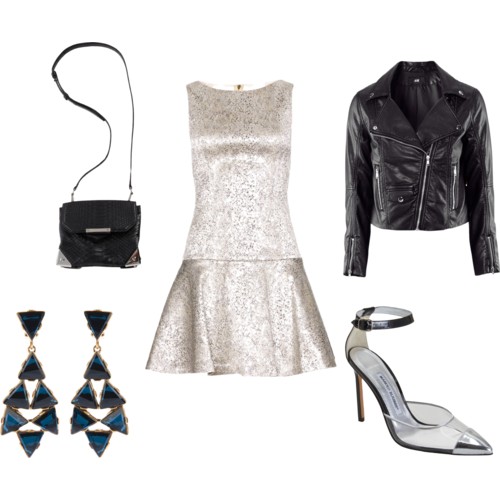
fancy brienne

Metallic, of course. And she’d probably toughen up a sweet dress with a leather jacket. Brienne is no Cinderella and certainly needs no Prince Charming, so her slippers aren’t quite glass. Her earrings hint at her home, the Sapphire Island, where the water is a beautiful blue.

casual brienne

In a more casual setting, we can give a shout out to Brienne with a metallic sheen and a tough wrist cuff reminiscent of her armor. I’d like to think Brienne is coming to her own and would proudly be that tall girl wearing heels. She knows she’s a bad B.

I’ve also made outfits inspired by JaimeAryaMargaery, Daenerys, and Jon Snow. Who’s your favorite?

trapped (or, reading under the dome)

under the dome

I’m almost finished with Under the Dome (Kindle version here). In it, a town called Chester’s Mill in Maine gets trapped under, well, a dome that’s exactly the shape of the town. No one can get in and no one can get out. This town is left to its own devices as it tries to keep order and figure out how to survive cut off from the rest of the world. Because it’s Stephen King, there’s also a lot of murder and some sci-fi thrown in, and I am having a blast reading it.

But it also terrifies me. And I don’t mean just getting a little jumpy. I mean the concept of being cut off from everything else really truly scares me.

Continue reading “trapped (or, reading under the dome)”

everyone was going (embroidery no. 8)

no one was invited embroidery rae's days

This week’s quote is from Cannery Row by John Steinbeck. I loved the characters in that book, and I love love love the parties they throw. The whole town shows up and to a raging party–but was anyone actually invited? It doesn’t matter. It’s the talk of the town, and everyone is going. See more of my thoughts on Cannery Row and the charming people of that story here.

Continue reading “everyone was going (embroidery no. 8)”

in cold blood

in cold blood

Our book club book this month was In Cold Blood by Truman Capote. Have you read it? It’s a really amazing, in-depth account of a horrible murder of a family in Western Kansas in 1959.

I’m an editor, and I actually interned at the Kansas City Star, which comes up often in this book. I can’t seem to ever turn off my editor brain, especially when I’m reading nonfiction. And after some recent controversy came up doubting some of Capote’s claims, my editor brain was all over this novel.

Please don’t misunderstand me. The amount of research that went into this book is astounding. I am confident 95% of it is right on the money and expertly and beautifully presented. It’s the other 5%–the nonexistent attribution for conversations Capote couldn’t have been present for, or describing expressions when he wasn’t in the room–that sparks a teeny tiny bit of skepticism from me. These details probably won’t matter to most people. He makes his claims based on days–months probably–of interviews and years of research. So even if he was assuming how someone’s face looked when they got bad news, he likely assumed correctly. But if you’re claiming your novel is 100% accurate, then I think you should be able to clearly say how you know these things are true, even the little moments and expressions that don’t matter much to the whole tale.

We talked about this in book club, and most of the people who weren’t journalists didn’t sweat this small stuff. But we did talk about how he got his information, and journalistic standards and ethics. My book cub notes are here:

in cold blood notes

Like how close is too close? Did his relationships with his subjects color his account? My issue isn’t with the writing (how could it be, it’s incredible), it’s with transparency. Having more transparency may not have made this book a better story. But I do think it would have made it a stronger journalistic piece. And if you don’t want that–if you’d rather it be a gorgeous piece of writing that’s 95% accurate and blurs the lines of truth here and there–then I’m totally cool with that. Really. As long as you tell me that’s what’s happening so I can read it with that in mind.

The structure of this novel is brilliant. He twists the victims’ and the killers’ stories so that they really only meet toward the end–once Dick and Perry are caught and are telling their tale. I read that Capote was one of the first to do this kind of nonfiction novel. He made it popular, and, when he was writing, footnotes and strict record-keeping weren’t really a thing yet. I understand, but I do wish they were there. Because I’m a big nerd, and I like to read them. And also because if they were there, it would be easier to dispute/support others’ claims of inaccuracy.

One of my favorite themes in the book is perceptions versus reality. The killers eventually confess, but do you believe every word in their confessions? Their personalities can seem sweet or callous, depending on circumstances, so who are they really? Sensitive and charming? Or manipulative, cold-blooded killers? The Clutter family was well-off and lived in a big house and took care of big business. The killers believed they were rich, but found next to no cash in their house. What’s real? Does reality or perception even matter when the end result is a dead family?

What do you guys think?

(I bought this book on my own and am not being paid to write about it. I am not affiliated with Word; I’m just a fan.) 

see synonyms at monster (embroidery no. 7)

embroidery

For #familybookclub  this quarter, we read Middlesex by Jeffrey Eugenides. (We’ll plan a video/phone chat soon to discuss!) In Middlesex, our narrator tells the story of a Greek family over three generations and a rogue gene that shows up in the youngest member of the Stephanides family and changes his fate.

Our narrator Cal is born as Callie. He is intersex, and has both male and female genitals. His family raises him as Callie, a woman, and later, after learning more about himself, he becomes Cal, a man.

To tell how Callie became Cal, he begins the story of his ancestors, starting with how his grandparents, who are brother and sister, fall in love. As Cal learns more about who he is, he visits a doctor, who calls him a hermaphrodite. Cal is young, and still Callie at this point, and doesn’t understand the word. So Callie looks it up in the dictionary. And to her horror, finds the words “see synonyms at monster.”

Continue reading “see synonyms at monster (embroidery no. 7)”