pulp fiction

I’ve said it before, and I’ll say it again: Any reading is good reading. Reading something stupid doesn’t make you stupid. And reading something you disagree with doesn’t mean you give up your beliefs.

As we said at book club, you need a balanced book diet. You can’t read nothing but Proust without burning out just like you can’t read nothing but dime-a-dozen mystery/romance/werewolf novels.

I heard at book club that pulp fiction takes it name because if they didn’t sell, publishers would pulp the books. They were so cheap that they’d just destroy them. So maybe it’s no wonder pulp fiction gets a bad name. It’s looked at as the literary novel’s trashy younger sister–you know, the one no one takes seriously and who you’d be embarrassed to take out on a date.

But good writing is an exception to the rule you get what you pay for. If it takes you somewhere new, if it’s entertaining, if you stretch your brain in a new way, well, that’s worth a lot. Even if it’s not serious, critically acclaimed, prize-winning writing.

But if it’s not award-winning, what is pulp fiction? Is it genre? Is it storytelling for a mass audience? How would you define it? Like the Supreme Court and pornography, I’ll know it when I see it. But it’s getting harder and harder to tell the difference.

Before Ender’s Game became a novel-turned-movie coming out soon it was just the first book in a new science fiction series. Before Harry Potter vanquished Voldemort he was the main character in a new fantasy book. Charles Dickens’ novels first came out in parts in magazines. Sherlock Holmes is the star of the mystery genre, and Frankenstein’s monster the king of horror. But why are those novels considered literary instead of pulp? Why are they studied in school instead of trashed after reading?

Stephen King is one of my favorite authors, and his books are often at the center of a literary versus pulp debate. His writing is clean and entertaining. His imagery and mood building are stunning. His characters and stories are human and lovely and scary and real. His books have symbolism and themes and other things lit classes love to analyze. But his work is prolific, easy to read, and sometimes contains monsters or twists in reality. So though he can write circles around most, he is often shoved into a less serious category.

It’s much more fun for me to read King than other “literary” works. I’ve never finished Pride and Prejudice (love the movie), but I couldn’t put down The Shining. Reading can be fun and easy and still worthwhile. So ease up, pulp-fiction haters.  Don’t you want to have some fun? Don’t you want to know how to tell a story that’s grabbed so many readers and held them at rapt attention?

That is a skill that few can do. So even if it’s not your favorite, you can learn from pulp. And you can stop looking down your nose at writers who have sold millions on millions of books.

So let’s cut this snobbiness out. My challenge to you is to pick a book in a genre you haven’t read before. Dive into a fantasy, a romance, a horror story, a mystery, and let’s meet back here and talk about it.

the hunter: a parker novel

the hunter

The beginning of The Hunter by Richard Stark (kindle here) is like nothing I’ve seen before.

Its short sentences, active voice, and powerful verbs carry you with it like a current you can’t escape. Not that you’d want to. You’re right there in the action, and you don’t know who this large, scary guy is or why he’s doing these large, scary things–but you don’t need to know. You just need to know what happens next.

(Anyone interested in action writing or short writing or plain old good writing should take a look.)

Eventually Parker–the large scary man–clues us in on his back story. At least enough to know why he’s mad at Lynn, his beautiful wife. And why he’s murderously angry at Mal, a crook who stole from a crook.

The Hunter continues to tell a sharp, fun mob story with one anti-hero Parker solely focused on revenge. Parker is a criminal, but not the organized kind. In fact, he’s picked a fight with the mob–and he’s better at fighting than them.

It never matches the urgency of its beginning, but I had fun throughout. If you’re looking for a quick crime read, you’ve found it. And it’s the first of a series, so there’s several more stories to tell. You know I love a good detective novel, and this crime series is satisfying in the same way: entertaining, a little gritty, and action packed.

how to write short: word craft for fast times

how to write short

Reading How to Write Short by Roy Peter Clark (Kindle here) gave me stage fright. Or, I suppose, blog fright. How could I live up to his excellent examples? Lucky for me, he includes clear advice on how to sharpen short writing, and I’m happy to follow it. Most everyday writing is 300 words or less–unless your job is, well, a writer. We text and tweet and email a lot more than we write novels. (Even those who write novels, I bet.)

Short writing is often overlooked for its novel-length counterpart. After all, tweets don’t win Nobel Prizes–at least, not yet. But short writing has value. And an aspiring writer can learn from every kind of writing, Clark says. Like the back of cereal boxes, or OKCupid profiles, or–my fave–fortune cookies.

For those quick to say texting, tweeting, and other short writing is ruining our language, we went through this recently with telegrams and turned out ok. People were charged by the word, so abbreviations and crafty cutting were the norm. And now we’re doing it again–but digitally in tweets and emails. (I used to scoff, but now I’ve embraced abbreviations. They can be useful, especially in a tweet, and they can also be sort of hilar.)

Some short writing is both storytelling and communication. After all, letters tell a story. Clark says early novels used letters to tell important parts of the tale. I just finished Where’d You Go Bernadette, composed almost entirely in messages–updated with emails and faxes, of course. Our current family book club book House of Leaves is made up of documents and journal entries. These long stories are told through short writing, just like much of our own life.

My friends and I have an ongoing group text. That communication, made up of bursts of texts, abbreviations and inside jokes, tells a beautiful story. Clark’s more serious example is of mom and daughter texting during a shooting. Those texts kept a family in touch, helped a girl stay safe, and later told a story to us with much more directness and immediacy than 30,000 of the killer’s own words from his manifesto.

Clark also talks about the newsworthiness of Twitter. Short, to the point, continuous updates can place us directly in a story. His example comes from tweets on the ground after an earthquake. An example in my own life comes from Hurricane Sandy. I learned so much more about what neighborhoods were safe and where damage occurred than I could have from more traditional (and longer) news sources. Tweets like “just saw the lights go out on Water St.” (a made up example based on a real event) are just a few words long but communicate critical information.

You don’t need a lot of words to create a powerful piece of writing. In fact there’s a genre of stories only six words long. You may remember Hemingway’s “For sale: baby shoes, never worn,” which I love not only for its emotional impact but also its clever use of punctuation. Larry Smith, editor and publisher of SMITH Magazine and founder of Six-Word Memoirs, championed these short stories. I think mine would be “Girl with plan finds new adventure.” (A close second was “Left-handed editor who writes alright.”)

To me, the why of writing matters much more than the length. Long or short–and long writing sprouts from short writing after all–good storytelling matters. Communication matters. Ideas matter. And all can be told with just a few words.


what would glitz wear

glitz

I’m a little more than halfway through Glitz (Kindle here), my first Elmore Leonard novel. I can see why they make great movies. The dialogue is natural and entertaining, and the characters are interesting–from the off-duty detective to the casino’s lounge singer to the gangster’s bodyguard. I like how the women are equal players. Nancy Donovan is smarter than most–if not all–of the men surrounding her, including her husband. Linda is comfortable in her personality and ready to make her own way as an artist. They may have to play a man’s game, but they rewrite a few rules.

These women are sexy, but they aren’t just there for sex. But I bet no matter what they are doing, they look good doing it.

nancy donovan in glitz

Like Gretchen Wieners, Nancy keeps secrets in her perfectly coiffed hair. She runs a casino with her husband, Tom, and at least one Atlantic City gangster. And she can run circles around them. Nancy is always put together and she is not to be trifled with.

iris

Iris is a young, beautiful girl from Puerto Rico who dreams of being a hostess in the United States. She is spunky and fun but, man, does she have some bad luck.

linda

Linda Moon befriends Iris in Atlantic City. Out of all these women, I’d most like to be friends with her. She has her head on straight and is following her passion for making music. But she’s practical, too, and has figured out a way to make a living by singing in Nancy and Tom’s casino. And, like the rest of the casino, she could be decked out in gold when she performs.

ladonna in glitz

Ladonna is the former Miss Oklahoma. But I’m afraid she’s fallen a bit from when she took the crown. Now we never see her without a drink in her hand, and she’s terrified for her life because of the violence surrounding her. We first meet her drowning in both an oversized sweater and an oversized bloody mary.

I can’t wait to read more about these women, and the rest of the characters. More on Glitz soon!

10 books i haven’t read

mockingbird

Sometimes there feels like there is just never enough time to catch up. I could read all day and all night and never read all the things that look interesting. There’s so many classic books I still need to read, I wonder how I’ll ever manage to get to the new fantastic books coming out. And Twitter leads me to a hundred interesting articles before I’ve even had coffee. What’s a girl to do?!

I think I read probably more than the average person. I’m certainly no Stephen King, who reads roughly 70 or 80 books a year according to On Writing, but I generally am always in the middle of a book. But there are some books that have escaped my 20-some-odd years of reading.

  • To Kill a Mockingbird by Harper Lee. I know, I know! But I just haven’t gotten to it yet, ok? I also haven’t seen the movie, and I’m not even entirely sure what it’s about. A trial? A guy named Atticus Finch? I’m the worst!
  • Same with 1984 by George Orwell. (I also haven’t read Animal Farm)
  • Little Women by Louisa May Alcott. I’ve seen the movie though!
  • Lord of the Flies by William Golding. But I’m pretty sure this is about an island of boys, right? Kind of like a terrifying Peter Pan, where there aren’t any grown-ups?
  • Rabbit, Run by John Updike. I have been meaning to read Updike for years–years I tell you!
  • Fear and Loathing In Las Vegas by Hunter S. Thompson. I have read The Rum Diary, so I’m not totally hopeless when it comes to Hunter S. Thompson.
  • Pride And Prejudice by Jane Austen. Although I have started this a few times, and I completely love the movie.
  • The Lord of the Rings by J.R.R. Tolkien. Any of them. I haven’t even read The Hobbit. I’m totally failing at being a nerd.
  • The Stand. I love Stephen King. He’s one of my favorite authors and this is one of his most famous books.
  • And finally, anything by Elmore Leonard. After his death, it has re-come to my attention how much I have messed up by not reading his books. I’ve read his rules, and I’ve seen the movies. But why have I never read any of his books? I am positive I would love them. Anyone have a rec for what I should start with?

Are there any books you haven’t read that you think you should have? Please keep me from being too embarrassed and share some of your own.

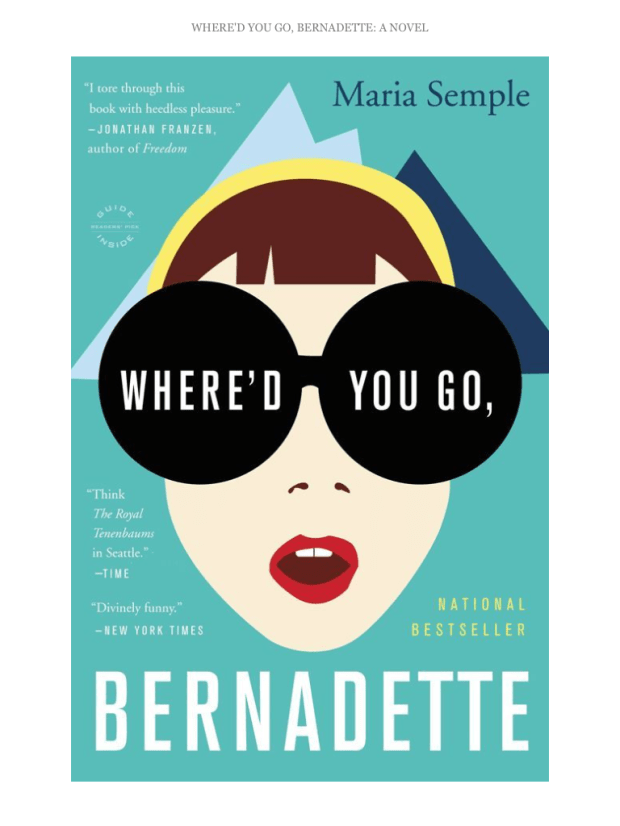
where’d you go, bernadette

bernadette

The other day on Twitter, I asked for a recommendation for a quick read. No less than three people recommended Where’d You Go, Bernadette (Kindle here)

Obviously, I had missed the memo on how great of a book this was. Lucky for me, my friends steered me in the right direction. And I am very glad they did.

Where’d You go, Bernadette follows the written, faxed, and e-mail correspondence of Bernadette, her neighbors, her husband Elgin, and her daughter Bee. After Bernadette’s mysterious disappearance, Bee uses these documents to piece together the truth about her mom and where she might have gone. (It sounds like the structure to our #familybookclub pick House of Leaves, but so far they couldn’t be more different.)Continue reading “where’d you go, bernadette”

the cuckoo’s calling parts 4 and 5

jk-rowling-the-cuckoos-calling

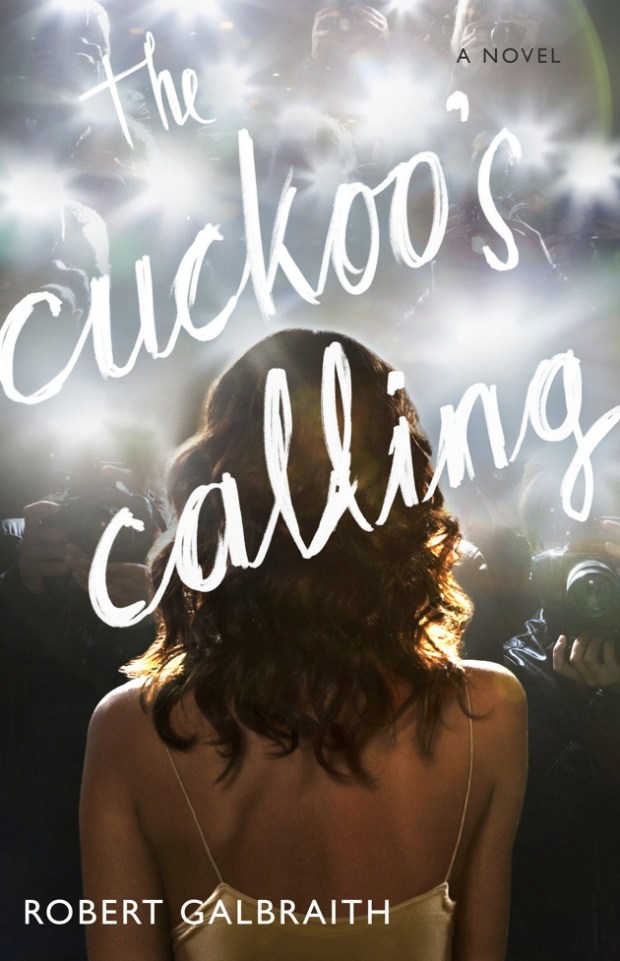
The Cuckoo’s Calling (kindle here) part 4 and 5 are combined because I accidentally finished it. I, well, wasn’t crazy about it. SPOILERS AHEAD. DEAD AHEAD.

Well, we found out the murderer. And I’m kind of annoyed about it. Making the murderer the person who hired the detective feels like a cheat and a gimmick, not a smart subversion of reader expectations.

Things did get a little juicier in the last parts. The pace picked up, and I read a little faster. Poor Rochelle is tossed over the edge, just like Lula was. Strike finally gets into some tough spots, even though one is with an elderly woman confined to a bed.

But the glimpse of celebs and some exciting detective work (I mean, a little bit at least) doesn’t make up for an ending (and middle?) that fell flat. I like an altercation with the killer as much as the next person, but why on earth would Strike, who is recently injured, has one leg, and has taken off his prosthesis, sit around his office and wait for Bristow to come do him in? I know he was a boxer, but what did he really expect to happen?

Continue reading “the cuckoo’s calling parts 4 and 5”

saga-inspired interiors

saga vol. 1

I read Saga, vol. 1, for book club this month, and I just loved it. It’s so sharp and funny and beautifully drawn. My favorite character is Lying Cat, of course, but there are so many other great characters that it’s hard to choose: Izabel, a typical teenager who happens to be a ghost with exposed entrails; The Will, a freelancer getting over a bad break up; The Stalk, in her eight-legged bad ass glory; and of course, the new parents Marko and Alana.

Everyone in book club loved it, too. On top of the lovely characters, there is a lot of layers to the story. There’s politics, a war, racism, morality, friendship, adventure, you name it. I had never read a comic book or graphic novel before, but I thought this was a great introduction. It’s very readable, and though book club deemed it a bit choppy, we all thought the storytelling was great.

So I picked up volume two and devoured that as well. Lucky for me, the next issue comes out this month so I don’t have to wait too long for the next installment.

One of my favorite parts of diving into comic books was the drawings, obvs. I love the color story for each character and setting. And in the spirit of Saga, I created some interior design collages with a character and their home in mind.

the will

The Will. His colors are light and airy, and we see a lot of blues, whites, and yellows. His spaceship seems pretty minimalist and modern. Ever the bachelor, I don’t expect he’d be into too may frills. I imagine Lying Cat would take over his chaise, and The Will would definitely have some catnip on hand.

Continue reading “saga-inspired interiors”

the cuckoo’s calling part 3

jk-rowling-the-cuckoos-calling

You know, it’s surprising we didn’t guess it was Rowling right away. She’s got a thing for crazy names. Hermione. Cormoran. In part 3 of The Cuckoo’s Calling (Kindle here), we meet the mysterious Rochelle, have a run in with Lula’s angry racist uncle, and Robin flexes her deception muscles.

Strike is continuing his clue gathering and interviews. He finally met Lula’s friend from rehab, Rochelle, who seems as unreliable as just about everyone else he’s interviewed. Robin finds Rochelle by pretending to be Rochelle when she calls the hospital to ask when her appointment is. Then they stalk the entrance of the hospital until Rochelle arrives. Robin also pretends to be someone she’s not when she and Strike visit the boutique that Lula visited the last day she was alive. Robin has certainly been getting into this detective business. (Speaking of Robin, are her and Strike ever going to get it on?)

Continue reading “the cuckoo’s calling part 3”

saga: white outfit inspiration

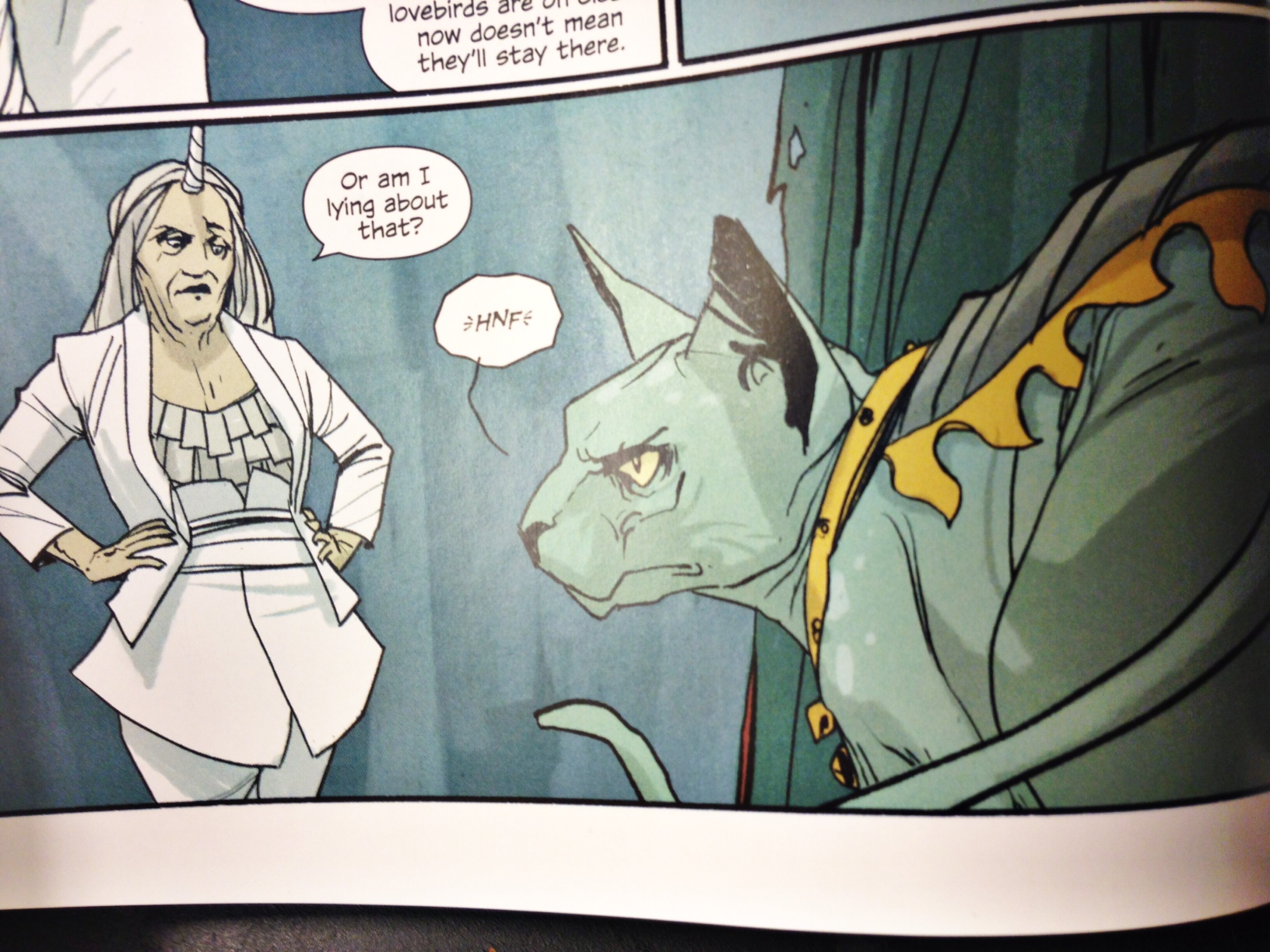
I just read a graphic novel for the first time. It’s called Saga, vol. 1, by Brian K. Vaughan. It was cool! Ever the speed reader, I had to remind myself to not just read the text, but to really take a look at the images. It’s kind of a love, adventure, space travel, war story, I think.

Check out this Bad B and my new best friend, #lyingcat. He can tell if you’re lying.

saga, lying cat

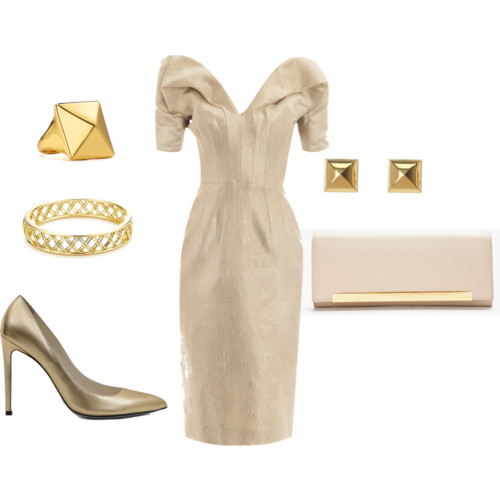
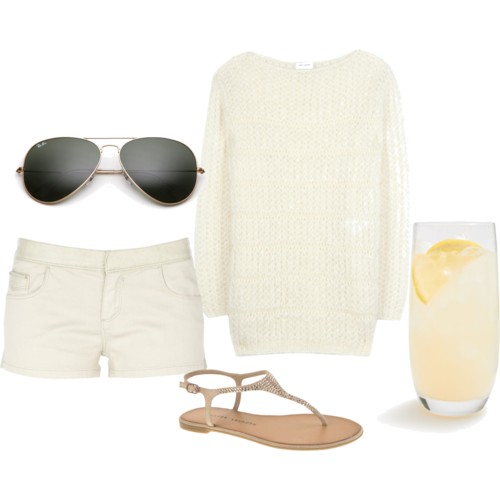
I don’t know this woman’s (is it a woman?) name, but I do know I like her sense of style. I love an all white look but can rarely pull it off because I tend to spill my coffee. A lot. If I were to do an all white look any way I wanted, I might do something like this. With a bold, pointy ring to represent her horn, of course.

all white

More on Saga this weekend after book club. Until then, try this monochrome thing, and may you carry your Tide pen with you.